
Loss of smell as an early warning sign Dr. Paule Joseph discusses links to dementia and mortality risks during Cizik Lecture
A change in her mother-in-law’s cooking sent Paule Valery Joseph’s research in a new direction.
An extra-salty holiday meal might not raise red flags in most families, but Joseph is a chemosensory scientist who worked on the genetics of taste and smell for her PhD dissertation. Many tests later, her mother-in-law was diagnosed with frontal temporal lobe dementia in her early 50s.
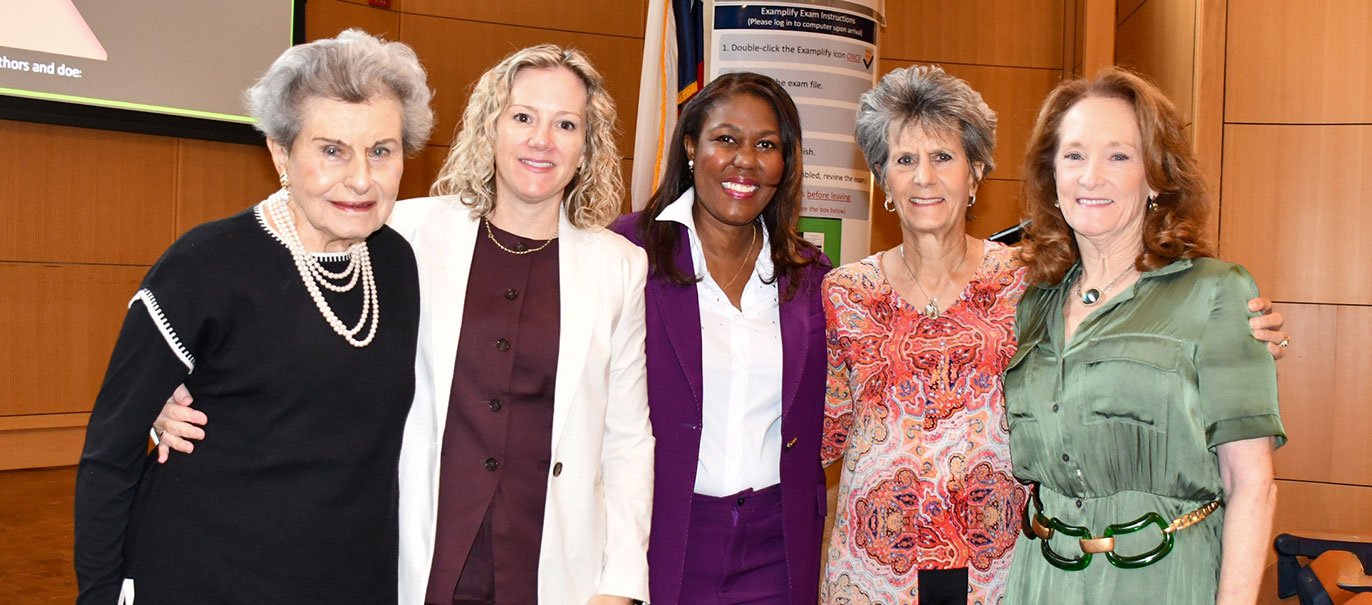
“She became my willing research partner,” said Joseph, PhD, MBA, CRNP, FAAN, during the keynote address at the fifth Jane and Robert Cizik Lecture at Cizik School of Nursing at UTHealth Houston on March 31.
Joseph is the co-director of the National Smell and Taste Center, which was established in 2024 at the National Institutes of Health (NIH). She co-directs the center with Joshua Levy, MD, MPH, chief of the audiology unit at National Institute on Deafness and Other Communication Disorders (NIDCD). She is also section chief of Sensory Science and Metabolism in the Division of Intramural Clinical and Biological Research at the National Institute on Alcohol Abuse and Alcoholism, with a joint appointment at the NIDCD.
Her mother-in-law’s experience led Joseph to further study the relationship and mechanisms of how the loss of smell is a strong early predictor of developing dementia, which can affect the parts of the brain that interpret olfactory stimuli.
“Smell loss can occur five to ten years before other symptoms,” she said.
She described smell as a “Cinderella Sense” that historically didn’t get as much attention as vision or hearing, for example. She refuted the assumption that loss of smell isn’t life-threatening, citing examples such as the inability to detect smoke or gas odors.
“Before 2020, smell was not considered a health indicator at all,” Joseph noted.
Early that year, she and colleagues around the world began noticing social media posts from people who suddenly couldn’t smell their morning coffee. Smell tests ultimately proved more reliable than fever or cough in detecting COVID-19.
Once the pandemic shutdowns began, it took only a few weeks to establish the Global Consortium for Chemosensory Research, which Joseph co-founded. The group now numbers more than 760 members from 71 countries who have compiled millions of data points.
“Approximately 50% of COVID-19 patients lost their sense of smell, and some of them haven’t recovered it, which now we describe as part of long COVID,” she said.
It also turns out that olfactory problems can be an early symptom of more than 139 diseases. Multiple research studies have shown that impaired ability to smell can be a better predictor of five-year mortality risk than heart failure, diabetes, stroke, and emphysema.
“It’s a window into systemic health,” Joseph said.
Alcohol use can also change how people perceive odors, she added. Heavy drinkers are more likely to experience parosmia (a distorted sense of smell) or phantosmia (olfactory hallucinations). Their reduced sensitivity to bitterness and heightened response to pleasant smells may also indicate changes in sensory reward bias.
Olfactory training, which involves sniffing four standard odors twice daily for at least 12 weeks, is the recommended first-line treatment for loss of smell and has demonstrated moderate to large effects in clinical trials. Emerging therapies, including platelet-rich plasma injections, are also under investigation. Joseph encourages people to take the time to pay attention to aromas while cooking to hone their sense of smell.
Her dream is for smell to be treated as a vital sign checked at every health appointment with sniff cards or pens. She believes nurses can lead the way in advocating for routine olfactory testing and in this growing field of research.
Joseph pointed to a significant institutional milestone: the National League for Nursing recently approved the first national vision statement integrating smell and taste assessment into nursing education across more than 1,700 programs in the United States.
“For the first time, nurses at the bedside, in the clinic, in the community, will be trained to ask the question,” she said. “That is how systems change. Nursing is leading the way.”
Joseph closed by encouraging nurses to consider pursuing careers in research.
“You don’t have to choose between caring and discovery. Nursing science lives at that intersection of both,” she said. “Even if the field you are interested in doesn’t exist, don’t let it get you down, build it!”
The Jane and Robert Cizik Lecture is an annual series made possible as part of a foundational $25 million gift in 2017 from Jane Cizik and her late husband, Robert. Their endowment also supports faculty research and student scholarships and made possible the establishment of the interprofessional Cizik Nursing Research Institute (CNRI) in 2024. Get the details on the resources available to CNRI members.